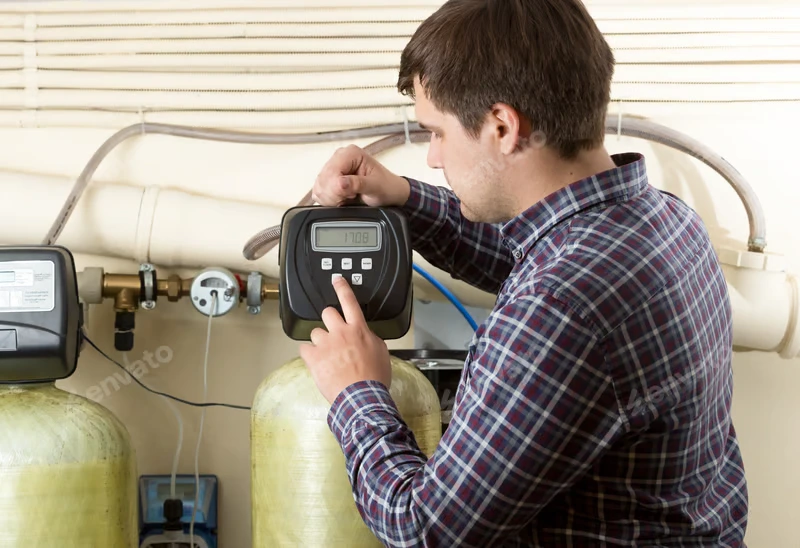
When exploring home water treatment options in Texas, you’ll frequently hear two terms mentioned in the same breath: water softener and reverse osmosis system.
Because both systems improve your home’s water quality, many homeowners mistakenly assume they do the exact same thing or that they can be used interchangeably. This confusion can lead to purchasing the wrong equipment for your specific needs.
At Clean Water Solutions Houston, we want our community to be fully informed. Let’s look at the distinct differences between these two foundational water treatment technologies.
What a Water Softener Does
A water softener is designed exclusively to handle your home’s working water—the water running through your water heater, showerheads, washing machine, and raw plumbing lines.
It uses a process called ion exchange to swap hardness minerals like calcium and magnesium with harmless sodium ions. The primary goal is to prevent scale buildup in pipes, stop appliance damage, allow soaps to lather properly, and prevent dry skin and hair.
However, a standard system does not filter out chemical contaminants, heavy metals, chlorine, pharmaceuticals, or biological matter. Your water will be soft, but it isn’t purified for drinking.
What a Reverse Osmosis System Does
A reverse osmosis system is engineered to provide premium-grade, pristine drinking and cooking water. It is typically installed under your kitchen sink or tied directly to your refrigerator’s ice maker.
It forces water under pressure through an ultra-fine, microscopic semi-permeable membrane. The system strips out up to 99% of all dissolved solids and contaminants, including lead, fluoride, nitrates, pesticides, arsenic, microplastics, and heavy chlorine to protect your family’s health.
However, an RO system processes water slowly and produces a small amount of wastewater. Because of this, it cannot be used to treat a whole house’s plumbing flow—it is strictly for consumption.
The Ultimate Dynamic Duo
To achieve complete water perfection, these systems shouldn’t compete—they should collaborate.
When you pair a whole-house system with an under-sink drinking water filter, the softening loop removes the harsh minerals first. This protects the delicate filters from scaling, allowing your drinking water setup to last significantly longer and operate at maximum efficiency.
Still confused about which system your home requires? Contact Clean Water Solutions Houston today at 281-224-6160 to speak with a licensed water expert and map out your home’s path to crystal-clear water.